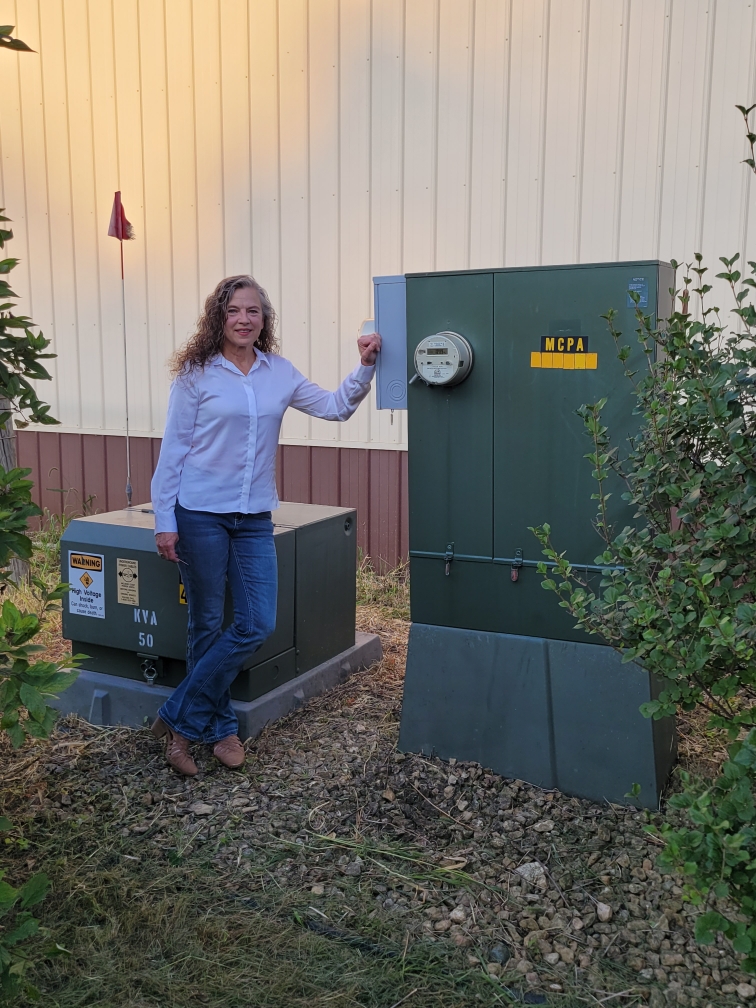
For more than 20 Years, McLeod Co-op Power member Ann Riewer has been making thoughtful choices about how and when she uses electricity. What started as a way to save money has become a practical approach that works well for her home while helping the cooperative manage demand.
When Ann moved her home from the edge of Hutchinson to the country in 2004, she compared her heating options and enrolled her electric thermal storage heating system, air source heat pump and water heater in MCPA’s load management programs. More recently, she added off-peak electric vehicle charging.
“Basically, the load management and the cost savings is what made me think to do that,” Ann said. After all those years, the programs have simply become part of everyday life.
Her storage heating system heats up ceramic bricks during off-peak hours, storing electricity as heat for use throughout the following day. Ann says it has been comfortable and dependable through more than two decades of Minnesota winters.
“I really haven’t had to make any adjustments,” she said. “It’s been very dependable.” The same is true for her storage water heater. Ann chose a larger tank so heated water could be stored for use throughout the day. Even when five people lived in the home, she remembers running out of hot water only once.
Ann also participates in McLeod Co-op’s cycled cooling program with her air source heat pump. During periods of high demand, the cooperative can briefly cycle participating equipment to reduce the load on the electric system.
During a recent high-demand summer event, she only knew something unusual was happening because McLeod Co-op asked members to conserve energy. She adjusted her thermostat a couple degrees and used fans to stay comfortable.
That idea of shifting electricity use is at the heart of load management. Electricity can cost the cooperative more when demand across the grid is highest. By moving energy use to lower-demand hours, such as heating water overnight, storing heat for later or charging an EV after the evening peak, members can help McLeod Co-op reduce wholesale power costs.
When many members make those small shifts, the savings add up and can help keep electric rates more affordable for everyone. Ann carries that mindset into other parts of her routine, too. She uses timers to run her washing machine and dishwasher early in the morning and has encouraged her son to avoid laundry during busy evening hours. “I’m doing it to save some money, but I also realize it’s taking the stress off the grid,” she said.
In 2023, Ann added off-peak EV charging after purchasing a Tesla Model 3. She spent nearly a year researching electric vehicles and comparing charging costs with gasoline. Today, she drives about 20,000 miles a year and estimates she saves approximately $2,500 annually in fuel costs after accounting for the electricity used to charge at home. Ann says “the biggest convenience is the home charging. If you live out in the country, the off-peak is where you really save”.
For members curious about load management, Ann’s advice is simple: ask questions. “Contact McLeod Co-op,” she said. “Or talk to somebody who has load management about their experience.” After more than two decades, Ann says that many of the “what ifs” people worry about never really become an issue. Her experience shows that load management can be comfortable, convenient and cost-effective while helping the electric system work better for everyone.
Want to Learn More?
Load Management or Off-Peak programs can help you save money while helping McLeod Co-op Power educe demand during peak periods and manage wholesale power costs for all members. Explore available programs and rebates or contact the cooperative at 320-864-3148 or 800-494-6272 to find out which options may be a good fit for your home.