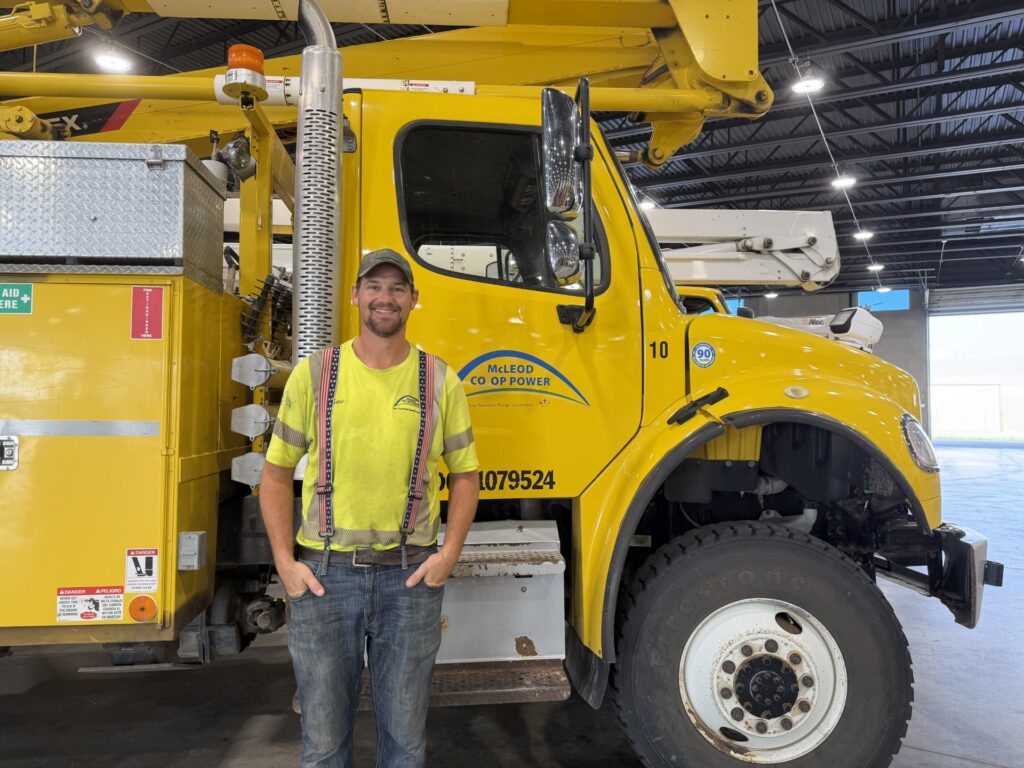
When the power goes out, members see darkened lights and silent appliances, but at McLeod Co-op Power the clock begins to tick. For lineworker Kevin, an outage begins with a notification and a commitment to restore service as quickly and safely as possible.
McLeod Co-op Power’s smart meters can help identify when and where an outage has occurred, but members should always report their outage. Calling remains the most effective way to ensure the cooperative is aware of the problem and provides valuable details about what members are seeing. Once the call center contacts the on-call crew, lineworkers have 30 minutes to report to the office.
After arriving, the crew patrols the line and searches for the cause. Sometimes the problem is easy to spot, such as a fallen tree or broken pole. Other times, it takes longer to find.
“Storm-damage is our number one cause of outages,” Kevin said. Squirrels and other small animals are another common cause.
Underground lines are protected from many weather-related problems, but underground outages may take longer to diagnose because crews cannot visually inspect the entire line. Overhead damage is often easier to see, while underground problems require additional troubleshooting.
RESTORING THE GREATEST NUMBER FIRST
During a widespread outage, crews begin with the main three-phase feeders, which serve the greatest number of members. Once those lines are restored, crews move to single-phase taps and individual outages.
Restoration time depends on the location and extent of the damage. Some outages can be resolved quickly, while others require temporary repairs, replacement equipment or additional crews. A broken pole may need to be completely replaced before service can safely resume.
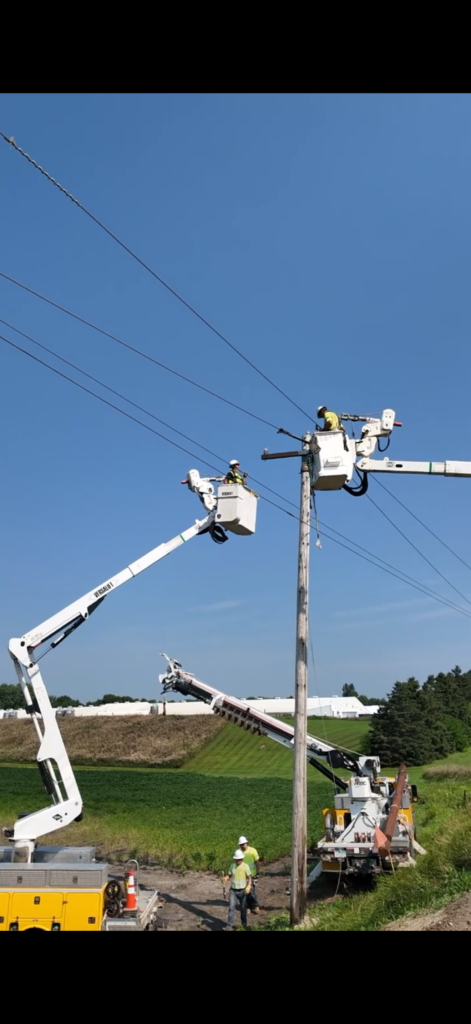
Before work begins, crews conduct a tailgate meeting to discuss the job, identify hazards and review the repair plan. Lineworkers then put on the required protective equipment and complete the work carefully. “We’re going to perform the task in a safe and efficient manner,” Kevin said.
SAFETY COMES FIRST
Outage restoration often takes place in difficult conditions. Ice-covered roads, poor visibility, high winds, extreme cold, darkness and fallen trees can make it harder to reach damaged equipment and complete repairs.
Kevin said LED lighting on cooperative vehicles helps crews see at night, but weather remains one of the greatest challenges. Restoring power during whiteout conditions or severe storms is physically demanding and requires crews to remain alert through long hours.
Another serious hazard is electrical backfeed from an improperly connected generator. When a generator is plugged into a home without proper transfer or disconnect equipment, electricity can travel backward through the transformer and energize a line that crews may believe is de-energized.
Kevin explained that this can place 7,200 volts onto the cooperative’s line, creating a life-threatening danger. Members should follow manufacturer instructions and have a qualified electrician install the proper generator equipment.
A COOPERATIVE-WIDE EFFORT
Lineworkers may be the most visible part of outage restoration, but employees throughout the cooperative are involved. Office staff, dispatchers and field crews communicate to identify affected areas, organize repairs and keep restoration moving. “It can be a bit hectic when we do have a major storm, but we are all prepared to get everyone restored,” Kevin said.
Some outage calls also become memorable community experiences. Kevin recalled responding to an outage at the Arlington Raceway during a race. The crew was escorted onto the track to make repairs. When the power returned, the announcer thanked them and the crowd stood and cheered as they left.
For Kevin, the greatest reward is seeing the results of the crew’s work and knowing members have power again. “We’re all working as fast and as safe as we can,” Kevin said. “We will keep going until the last member’s power is back on.”